syn. Veronica longifolia
syn. Veronica longifolia
Perennial of the Plantaginaceae family, long classified under the name Veronica longifolia, this species is widespread in Central and Northern Europe, from Eastern France to Siberia. It frequents wet meadows, riverbanks, tall herb communities, and the edges of cool woods, in plains as well as in mountains at moderate altitudes.
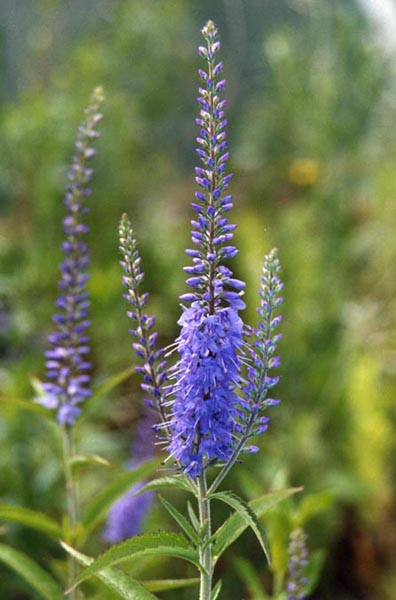
It forms upright clumps 60 to 120 cm in height, with rigid stems bearing lanceolate, elongated leaves with distinctly toothed edges, arranged in whorls or opposite pairs along the stems. The foliage is a bright green, quite dense.
The flowers are gathered in long, dense, and slender terminal spikes, from blue-violet to medium blue, opening gradually from the base to the top, which significantly extends the blooming period of the same spike. The protruding stamens give the spikes a slightly airy appearance.
In its natural habitat, its flowering extends from July to September. In cultivation, it generally blooms from July to August.
It prefers fresh to moist, rich soils, in the sun or light partial shade, and is not suitable for dry rock gardens. Its large size makes it more suitable for perennial beds, riverbank gardens, and large-scale naturalistic plantings.