ex Atlantic coast
ex Atlantic coast
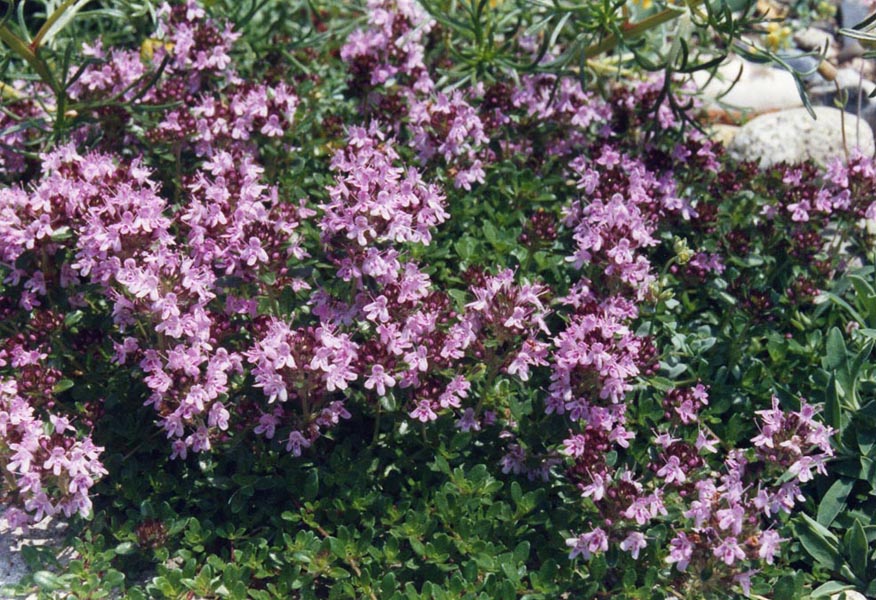
Sub-shrub of the Lamiaceae family, this form collected on the Atlantic coast has a noticeably more developed habit than the previous form, forming bushy and dense clumps 2 to 5 cm in height, with well-branched upright-ascending stems, with reddish bark visible between the leaves. This elevated and airy habit immediately distinguishes it from the strictly creeping forms of the group.
The leaves are small, oval to slightly rounded, of a fairly bright medium green, borne by stems that the photo reveals tinged with deep red-brown, giving the whole a particularly clear bicolor appearance before and during flowering.
The flowers are a pale lilac-pink, softer than that of form 1, gathered in numerous small terminal heads that succeed abundantly on the upright stems. In its natural environment, its flowering extends from June to August. In cultivation, it can start as early as the end of May depending on exposure.
It requires well-drained soil, poor to moderately fertile, in full sun. Its hardiness is good and it tolerates sea spray, which is consistent with its coastal origin. Suitable for rock gardens, walls, and sunny borders.