 alt= "Symphytum officinale 'Purpureum'"
alt= "Symphytum officinale 'Purpureum'"
alt= "Symphytum officinale 'Purpureum'"
Perennial of the Boraginaceae family, selected form of the common comfrey, native species in Europe and Western Asia, widespread in wet meadows, riverbanks and ditches, from the plains to the submontane levels.
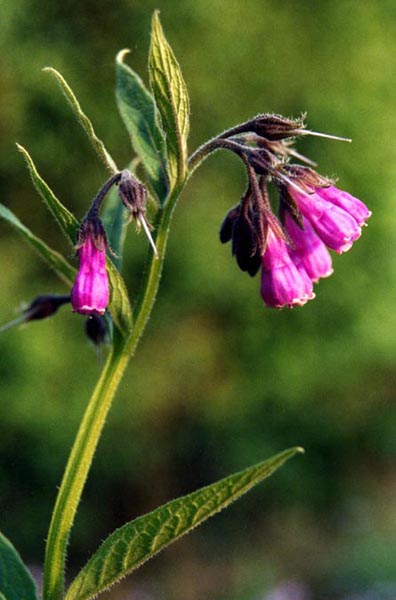
It forms upright and vigorous clumps of 60 to 100 cm, with robust stems, winged in their upper part, covered like the leaves with stiff hairs characteristic of the genus. The foliage is large, lanceolate to oval-lanceolate, medium green, slightly rough to the touch. The cauline leaves are decurrent on the stem, forming well-visible wings that distinguish this species from its close relatives.
The flowers, gathered in drooping scorpioid cymes, are tubular, of a strong and fairly bright magenta-purple, significantly more intense than the shades usually observed in the wild forms of the species, which generally range from creamy white, pink to pale violet.
In its natural habitat, the species blooms from May to July. In cultivation, this cultivar follows the same schedule, with sometimes a partial rebloom after cutting back.
Common comfrey has a long history of medicinal and agricultural use; its potassium-rich leaves are still used in maceration as liquid fertilizer. Like all comfreys, it is very attractive to bumblebees.
In cultivation, it requires fresh to moist soil and tolerates both full sun and partial shade. Its deep and fleshy roots make it very difficult to move once established.