Perennial of the Apiaceae family, native to Central Asia and the Far East, cultivated in Europe since at least the Middle Ages. It naturally grows by the waterside, in marshy areas and wet meadows; in cultivation, it is traditionally associated with vegetable gardens.
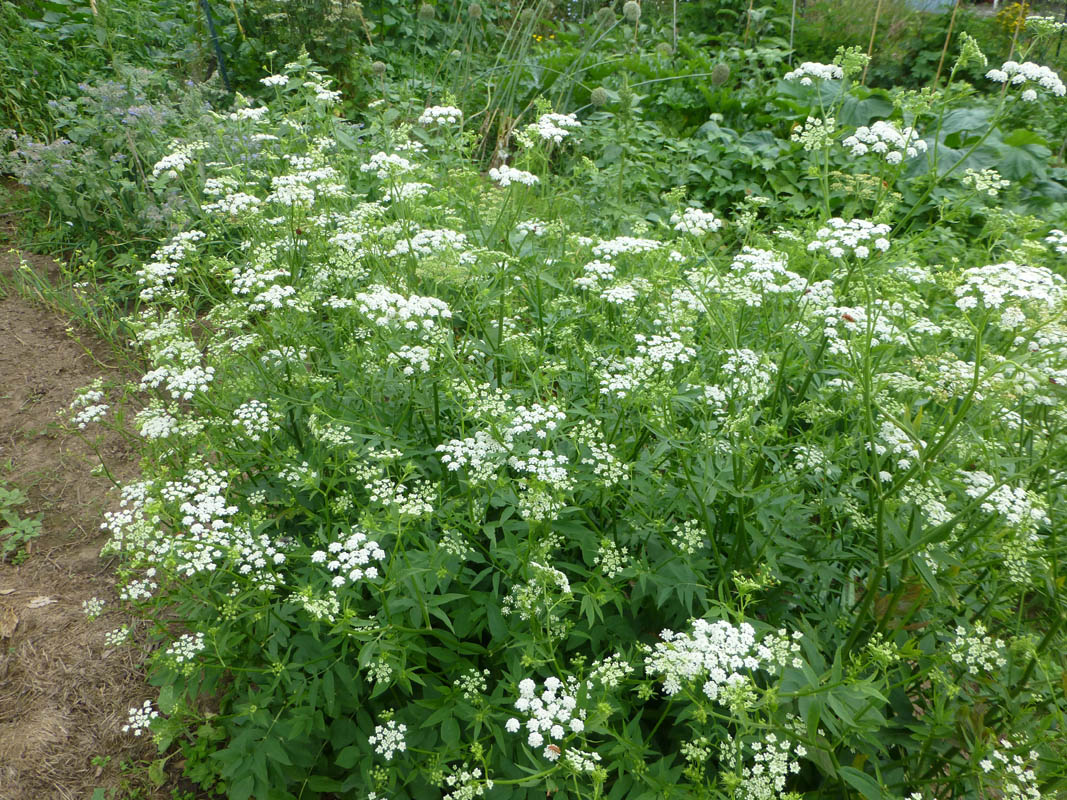
It forms vigorous and bushy clumps, reaching 60 to 90 cm in bloom. The leaves are pinnate, with lanceolate and finely toothed leaflets, a bright and shiny green. The upright stems bear large umbels composed of numerous small pure white flowers, which cover the entire plant in full bloom and give it the fluffy and generous appearance visible here.
In its natural habitat, its flowering extends from June to August. In cultivation under our climates, it generally blooms from June to July.
The plant is best known for its tuberous roots, grouped in bundles, sweet and floury, once appreciated as a vegetable under the name chervis. This vegetable, very popular in Europe until the 18th century, gradually disappeared from tables before sparking renewed interest among enthusiasts of forgotten edible plants.
It is cultivated in full sun to partial shade, in deep, fresh to moist soil, rich in humus. It tolerates heavy soils and does not fear excess water.