Perennial of the Caryophyllaceae family, widespread in much of Europe, from the British Isles to western Russia, and up to Central Asia. It grows on dry lawns, rocky outcrops, sunny edges, cliffs, and well-drained limestone embankments, from the plains to the montane level.
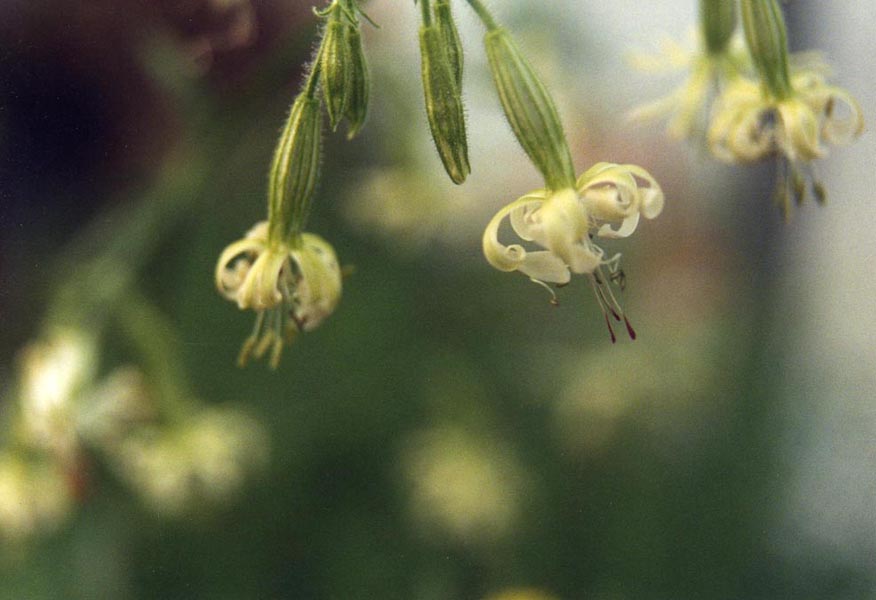
The plant forms a basal rosette of spatulate, soft, and pubescent leaves, from which slender, upright stems rise, 25 to 50 cm tall, bearing narrower lanceolate cauline leaves. The inflorescence is a unilateral and drooping cluster — a characteristic that the epithet nutans, "nodding", accurately conveys — with all the flowers curving to the same side with discreet elegance.
The flowers are white to cream-white, sometimes slightly pinkish on the outside of the petals, deeply bifid, with long protruding stamens and styles. They open at night and emit a sweet fragrance aimed at nocturnal butterflies, remaining half-closed during the day. The calyx is tubular, veined with green, and slightly sticky.
In its natural habitat, its flowering extends from May to July.
It is suitable for limestone rockeries, walls, and dry gardens in full sun. Undemanding once established, it reseeds moderately and benefits from being placed where its nocturnal fragrance can be appreciated.