syn. Sedum sieboldii 'Mediovariegatum'
syn. Sedum sieboldii 'Mediovariegatum'
Perennial cultivar from the Crassulaceae family, selected from the type species native to Japan. It shares the same general behavior as Hylotelephium sieboldii — trailing stems, complete winter dormancy, autumn flowering — but is radically distinguished by its variegated foliage, one of the most remarkable of the genus.
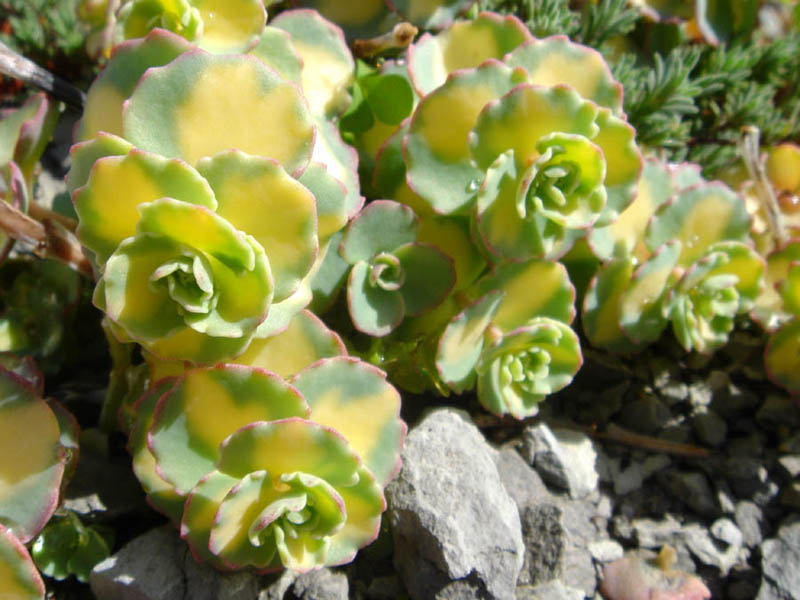
The leaves, arranged in threes in regular whorls on reddish stems, are round to kidney-shaped and fleshy. Their variegation is central, forming a broad cream to pale yellow area at the heart of each leaf, surrounded by a glaucous to blue-green zone, all edged with a fine pink-red margin. This combination of three shades on a single leaf, repeated at each whorl, creates a mosaic effect very unusual in the world of hardy succulent plants.
In autumn, the foliage gradually turns red-orange to bright red, the central cream area tinged with golden yellow — then the leaves fall almost entirely before the flowering is even completed. The dense and rounded bright pink corymbs are then borne on practically bare stems, giving them a singular and slightly surprising character at the end of the season. In its natural habitat, the flowering of the type species extends from September to October; in cultivation, this cultivar blooms at the same time.
It requires full sun and perfect drainage, as heavy and wet soils in winter are unfavorable during dormancy. Cultivation in pots or troughs is particularly suitable, allowing control of winter moisture and highlighting the trailing habit of the stems.