Perennial of the Saxifragaceae family. Its habit and behavior link it to the Saxifraga section (formerly Dactyloides), which includes saxifrages with soft rosettes and dissected leaves.
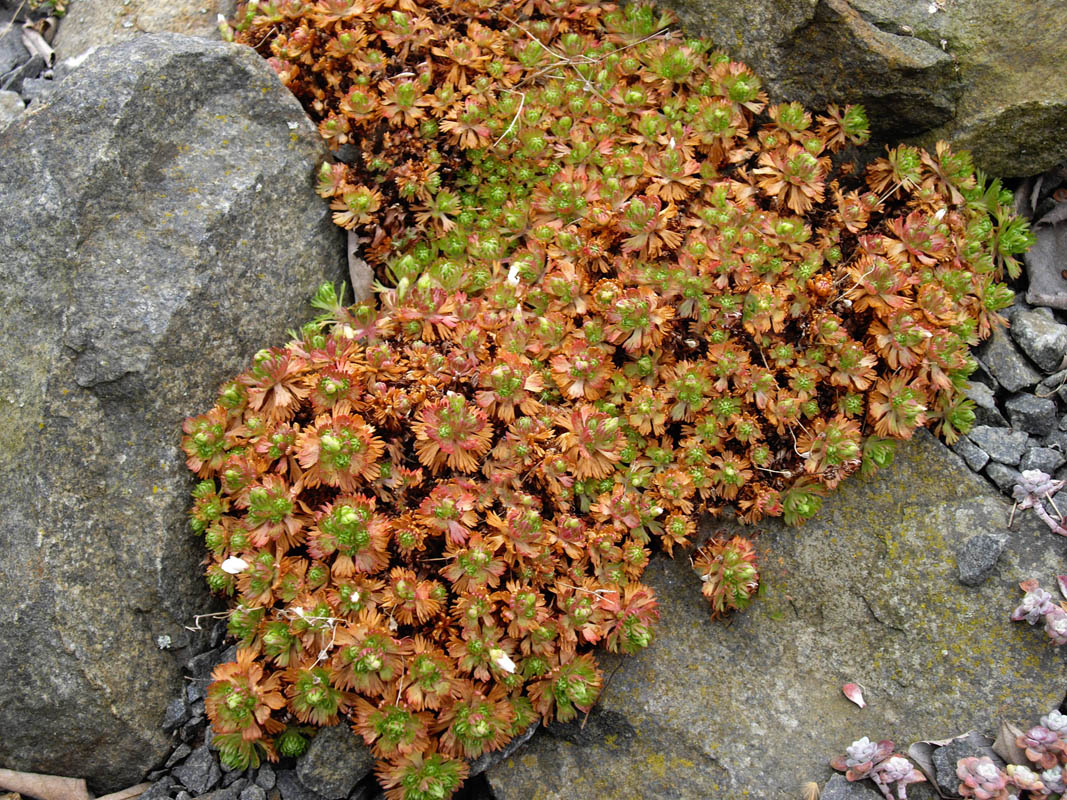
The rosettes, bright green in spring, then take on a deep orange-brown to intense red-brown hue that invades the entire cushion. This winter coloration, probably related to the accumulation of anthocyanins due to cold and low-angle sunlight, is a characteristic observed in several representatives of this section and gives the plant a visual interest far beyond the flowering period alone.
During the spring flowering, numerous upright reddish stems emerge from the cushion, bearing white flowers with five well-opened petals, a yellow-green center, and distinct reddish sepals. The profusion of flowers relative to the size of the cushion is striking, and the whole takes on an airy and generous appearance that contrasts with the density of the foliage outside the flowering period.
The habit and behavior in cultivation evoke S. rosacea, S. hypnoides, or one of their many hybrids and cultivars.
In cultivation, this plant appreciates a well-drained mineral substrate, in a sunny to slightly shaded exposure, and proves vigorous and easy between the stones of a rock garden.