syn. Centaurea pulcherrima
syn. Centaurea pulcherrima
Perennial of the Asteraceae family, native to the Caucasus, where it grows on rocky slopes and dry mountain meadows, on well-drained substrates.
It forms upright and fairly compact clumps, reaching 30 to 40 cm in height. The foliage is pinnatifidly cut, grayish to whitish due to a tomentose indumentum that gives it a characteristic silvery hue, reminiscent of P. dealbatus but generally more pronounced.
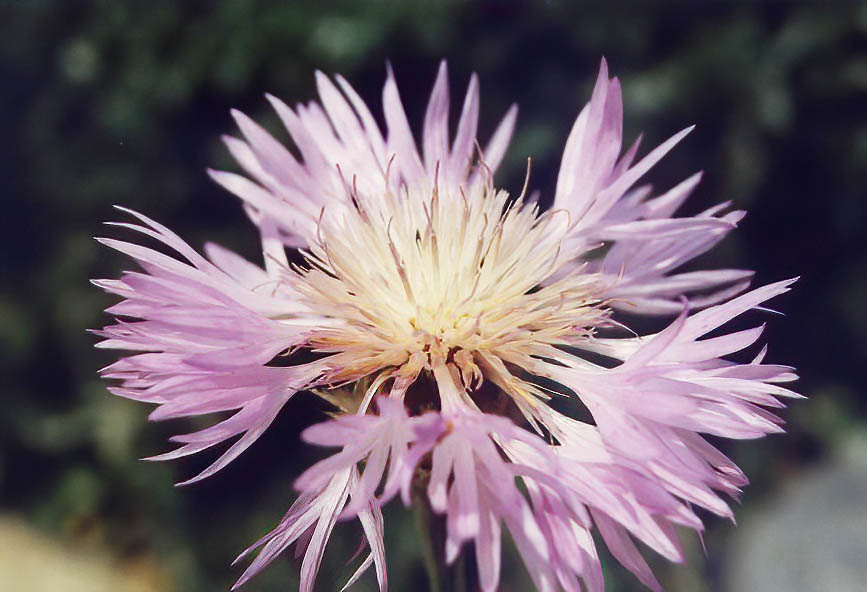
The solitary capitula at the top of the stems offer the same bicoloration as other Psephellus of the Caucasus, but in much softer tones: the peripheral ligulate flowers are a pale lilac pink, almost delicate mauve, surrounding a creamy to whitish center. The epithet pulcherrimus, the most beautiful, testifies to the impression it made on its first observers. In its natural habitat, its flowering extends from June to July.
In cultivation, it requires full sun and well-drained, light soil, rather poor and dry in summer. It tolerates heat and drought well once established. Dividing the clumps every three or four years helps maintain abundant flowering.