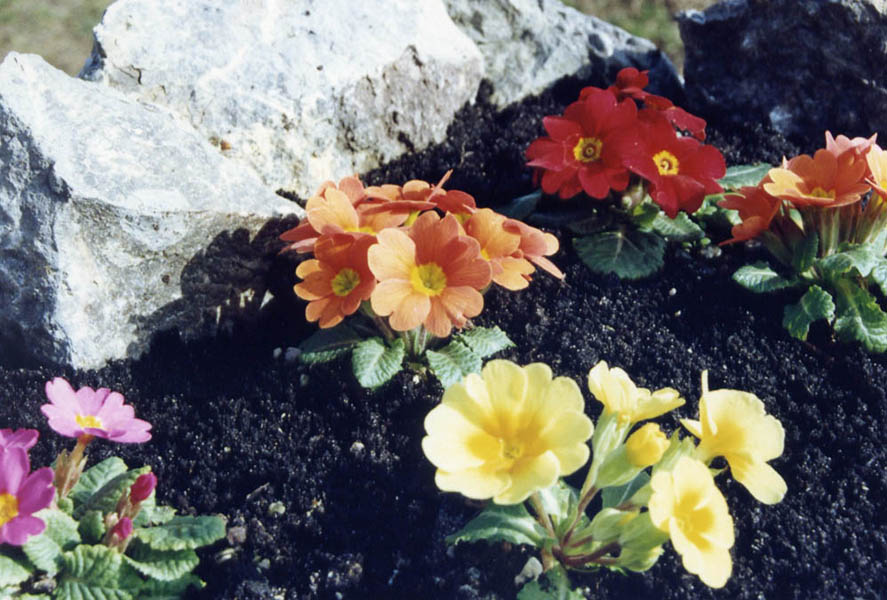
Primula × juliana is a perennial hybrid of horticultural origin, resulting from the cross between Primula vulgaris and Primula juliae, the latter originating from the eastern Caucasus. This group of cultivars, developed mainly during the 20th century, is today one of the most popular for rock gardens and spring plantings in pots or borders.
The plants form small, dense, compact clumps, rarely exceeding 10 to 15 cm in height. The foliage, persistent to semi-persistent depending on conditions, consists of small oval leaves with crenate edges, a bright green slightly crinkled, which cover the ground in an orderly manner. The flowers, borne individually on short peduncles, emerge directly from the heart of the clump and literally cover it at the time of flowering. The range of colors available among the cultivars is remarkably extensive, from pale yellow to crimson red, through warm oranges, bright pinks, and dark purples, almost always with a contrasting yellow eye.
In cultivation, flowering generally extends from February to April depending on exposure and climate. These primroses prefer a fresh, well-drained but never dry soil, rich in humus, in partial shade or filtered light. They tolerate full sun if the soil remains sufficiently fresh. Regular division of the clumps, every two to three years, maintains their vigor and flowering.