Perennial of the Polemoniaceae family, Polemonium carneum is native to the west coast of North America, from northern California to Oregon, where it grows in open meadows, light forest edges, and grassy slopes with fresh soil, at low to mid altitudes.
The plant forms upright but rather loose clumps, reaching 30 to 40 cm, bearing pinnately dissected foliage typical of the genus, with oval-lanceolate leaflets of a deep green. The photos clearly show this unstructured habit, with slender stems and dense but non-rigid foliage.
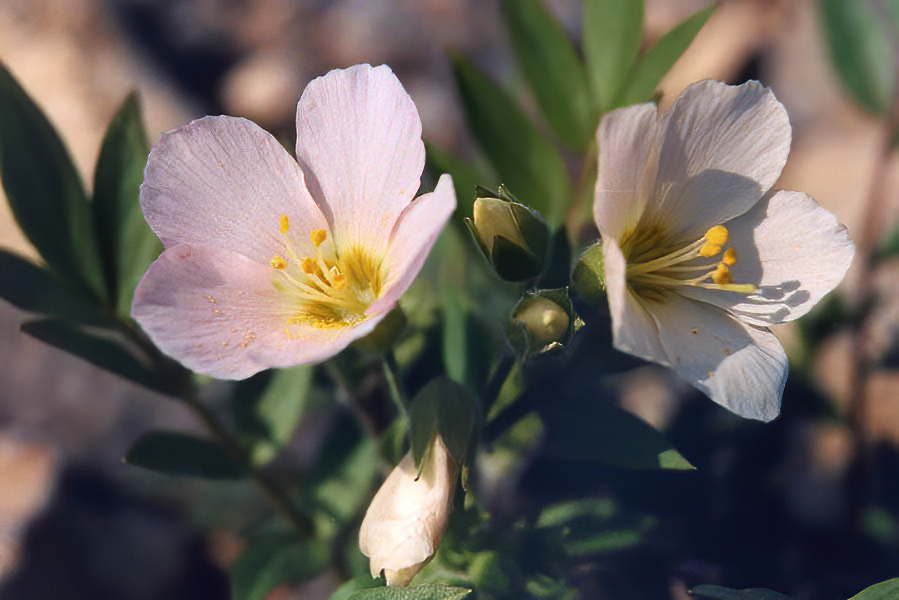
What immediately distinguishes this species within the genus is the color of its flowers — large, with a widely open cup, from flesh pink to pale lilac, sometimes almost white at the center, with slightly more pronounced veins on the petals and very visible stamens with bright yellow anthers. The variation in hue between individuals or depending on exposure is notable, as evidenced by the two photos.
In its natural habitat, flowering extends from May to July. In cultivation, it can bloom as early as April-May.
It prefers fresh, well-drained soil, in a semi-shaded position, and poorly tolerates prolonged dry heat. Less hardy than Polemonium caeruleum, it deserves winter protection in regions with severe frosts.