Perennial from the family Polygalaceae, this selected cultivar of Polygala calcarea is one of the most appreciated horticultural forms of the genus. Its origin dates back to the gardens of Arthur Bulley, founder of the Bees Ltd nursery in Cheshire, at the beginning of the 20th century — the same collector who funded several botanical expeditions in Asia. The selection bears his name in tribute to this passionate enthusiast.
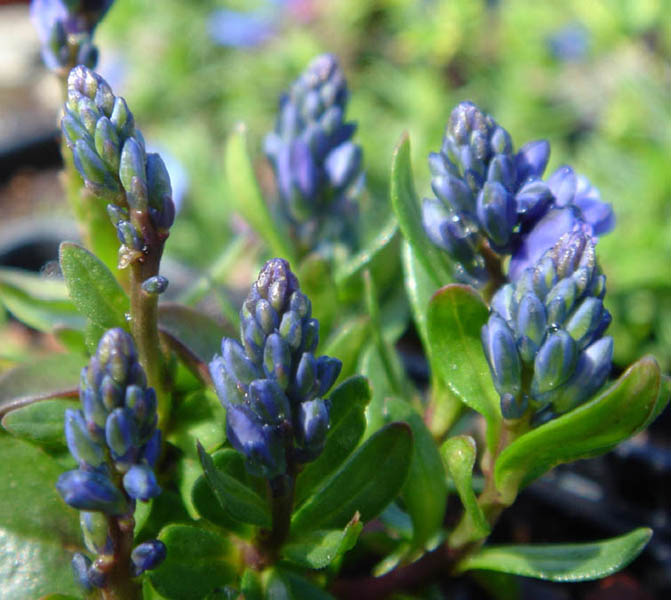
The habit is prostrate and bushy, with short stems emerging from basal rosettes of small, dark green, glossy oval leaves. The plant hardly exceeds 5 to 12 cm in bloom. What immediately distinguishes this cultivar from the wild form is the shade of its flowers, a lighter and brighter blue-violet, tending towards lilac-blue, with well-developed petaloid wings and a distinctly marked white-fringed keel forming a sharp contrast.
The floral clusters are dense, upright, generous, and abundantly cover the plant at the time of anthesis, as evidenced by the photographs taken in rock garden cultivation.
In its natural habitat, Polygala calcarea blooms from April to June. In cultivation, 'Bulley's Form' generally blooms in May, with sometimes a slight resurgence.
It requires a calcareous, lean, and perfectly drained soil, in full sun exposure. It performs well in rock gardens constructed with limestone or in troughs, provided it never suffers from excess winter moisture. It is considered one of the most reliable forms of the genus in cultivation.