Petromarula pinnata is a monocarpic perennial of the Campanulaceae family, endemic to the island of Crete, where it grows exclusively in the crevices of limestone cliffs and rocky walls, from sea level up to about 1,000 meters in altitude.
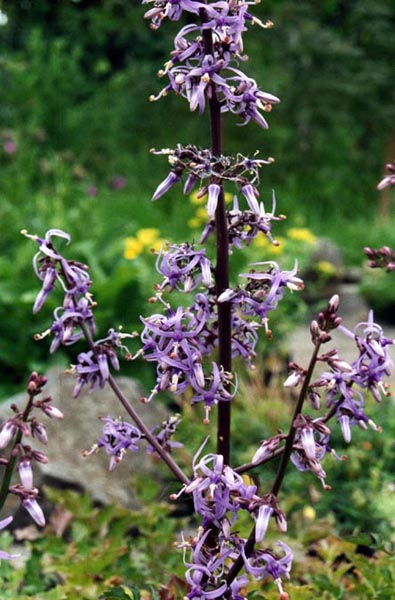
It forms a large basal rosette of deeply pinnatisect leaves, of a tender green, vaguely reminiscent of a fern or a very dissected dandelion. From this rosette emerges an erect, robust flowering stem, which can reach 60 to 80 cm, often tinged with dark purple, very characteristic.
The flowers, numerous and arranged in a long loose cluster, are of a delicate lilac-blue, with narrow and recurved petals giving a starry and almost ethereal appearance to the entire inflorescence. The prominent stamens accentuate this airy character. In its natural habitat, flowering extends from May to July.
A monocarpic plant, it blooms only once and then dies, but reseeds itself quite easily. In Crete, the young leaves are traditionally consumed cooked as a vegetable. In cultivation, it requires perfect drainage, a limestone substrate, and a sunny exposure; it does not tolerate very wet winters well.