syn. Papaver nudicaule
syn. Papaver nudicaule
Short-lived perennial, generally grown as a biennial, belonging to the Papaveraceae family. Native to the cold regions of Central Asia and Siberia, it grows in open meadows, screes, and rocky high-altitude slopes, on well-drained soils.
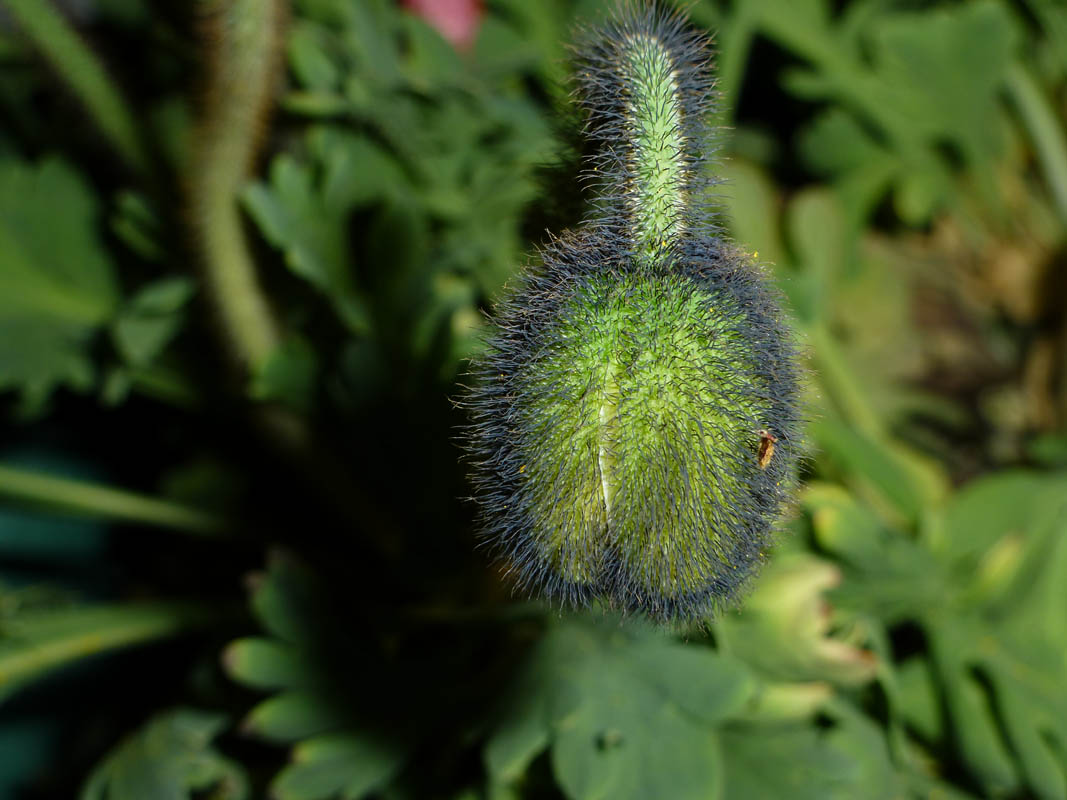
In cultivation, it forms a basal rosette of glaucous, finely cut, softly hairy leaves, of a grayish-green color. The floral stems, upright and solitary, each bear a globular bud densely covered with stiff black bristles, an immediately recognizable feature before anthesis. When opening, the crumpled petals unfold into a wide, silky cup, in a palette ranging from creamy white to bright yellow, salmon, orange, and coral red depending on the horticultural selections. The center of the flower reveals a crown of stamens with yellow-green filaments tightly surrounding a lobed chartreuse green stigma, of remarkable precision.
In its natural habitat, its flowering extends from June to August. In cultivation under temperate climates, it blooms from March to June depending on winter conditions.
It requires light, very well-drained soil, in full sun, and poorly tolerates stagnant moisture in winter. Sowing in autumn or very early spring is the usual method; it readily reseeds itself from year to year in suitable conditions.