syn. Helichrysum hookeri
syn. Helichrysum hookeri
Shrub of the Asteraceae family, native to southeastern Australia, mainly the highlands of Victoria and New South Wales, where it grows in alpine and subalpine heaths, rocky slopes, and the edges of high-altitude peat bogs, between approximately 1,000 and 2,000 meters.
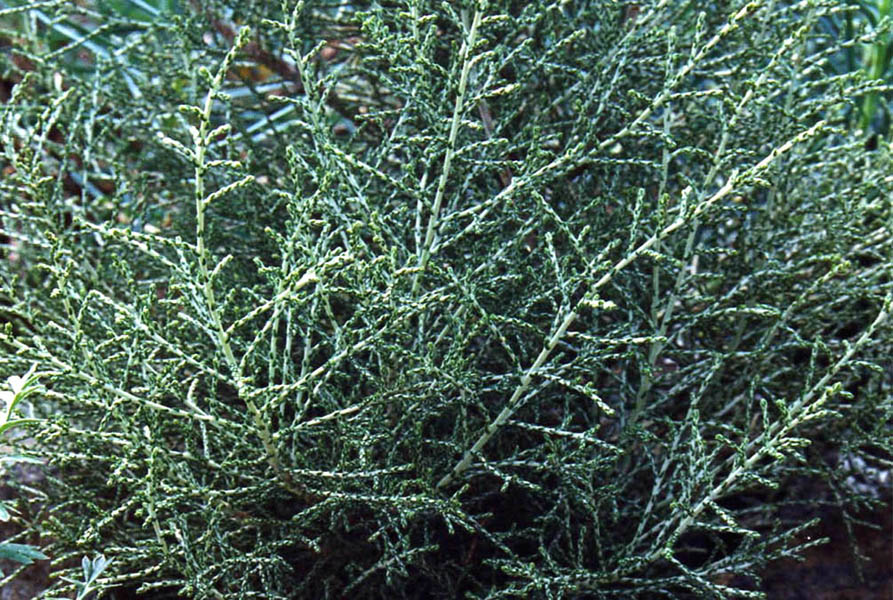
It forms an upright and branched shrub, 20 to 60 cm in height, with a tiered and airy habit that evokes from afar certain miniature conifers. Its foliage is its most immediately striking feature: the leaves are extremely reduced, scale-like and appressed against very thin, densely branched stems, creating a fine and regular texture, grayish-green to bluish-green, with a whitish tomentose underside visible through the branching.
The flowers are small white to creamy capitula, grouped in terminal corymbs. In its natural habitat, flowering extends from December to February. In cultivation under our latitudes, it occurs in summer.
It is cultivated in full sun, in well-drained soil, slightly acidic to neutral, not too rich. It tolerates moderate frosts but fears prolonged winter humidity. In regions with cold and wet winters, shelter or pot culture under cold conditions is preferable. It is above all a collector's plant, appreciated for the architectural finesse of its branching.