Perennial of the Lamiaceae family, native to Turkey, Syria, and Cyprus, where it colonizes dry rocky slopes, garrigues, and limestone terrains in full exposure.
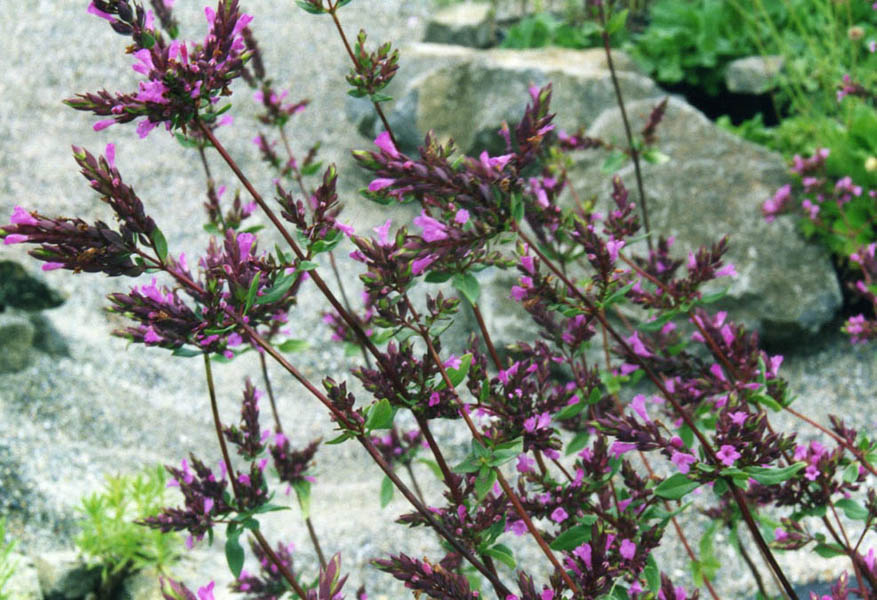
It forms a bushy clump with a woody base, 30 to 45 cm in height during vegetation, from which numerous slender, erect, and branched floral stems rise, tinged with reddish-brown to dark purple, contributing to its very decorative appearance even before the flowers bloom. The leaves are small, oval, dark green, glabrous or nearly so, which earns it its epithet — laevigatum meaning smooth.
The flowers, tubular and bilabiate, are rose-purple to bright magenta, gathered in small loose whorls along the branched stems. The bracts, smaller and less spectacular than in other ornamental oreganos, are tinged with purple and contribute to the dark and warm tone of the whole. The final effect, with its arched stems loaded with small bright flowers against a background of dark stems, is of a very particular lightness.
In its natural habitat, its flowering extends from June to September. In cultivation, it is one of the most generous aromatic perennials in prolonged summer flowering.
It requires well-drained soil, poor to moderately fertile, in full sun, and tolerates drought well once established. Hardy and easy, it is suitable for rock gardens, dry borders, and Mediterranean-style gardens. Several selected cultivars, including 'Herrenhausen' and 'Hopley's', are commonly available in horticultural commerce.