syn. Micromeria corsica
syn. Micromeria corsica
Perennial of the Lamiaceae family, endemic to Corsica and Sardinia. It grows on sunny rocks, coastal cliffs, and dry garrigues, on siliceous or calcareous substrates, from sea level to moderate altitudes.
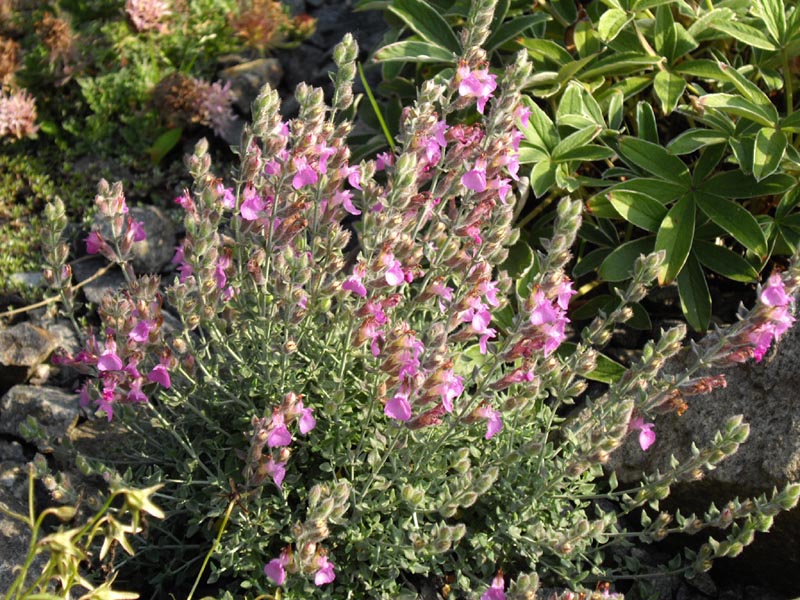
It forms dense, bushy clumps, 15 to 30 cm in height, with woody stems at the base. The leaves are small, oval, gray-green to dark green depending on sunlight, densely hairy to tomentose, releasing a pronounced aroma when crushed. The upright flowering stems bear many small bright pink to pink-purple labiate flowers, packed in leafy spikes that give the plant a very full appearance. The densely white-haired calyces persist after flowering and give the stems a very recognizable silvery downy appearance, clearly visible outside of flowering.
In its natural habitat, its flowering extends from May to July. In cultivation, it can bloom from May to August depending on exposure.
It requires a fully sunny exposure, a very well-drained soil, poor to moderately fertile, and easily withstands summer drought once established. It is perfectly suited to dry rock gardens, walls, and Mediterranean gardens. Its hardiness is limited and it requires winter protection in regions with cold and wet winters.