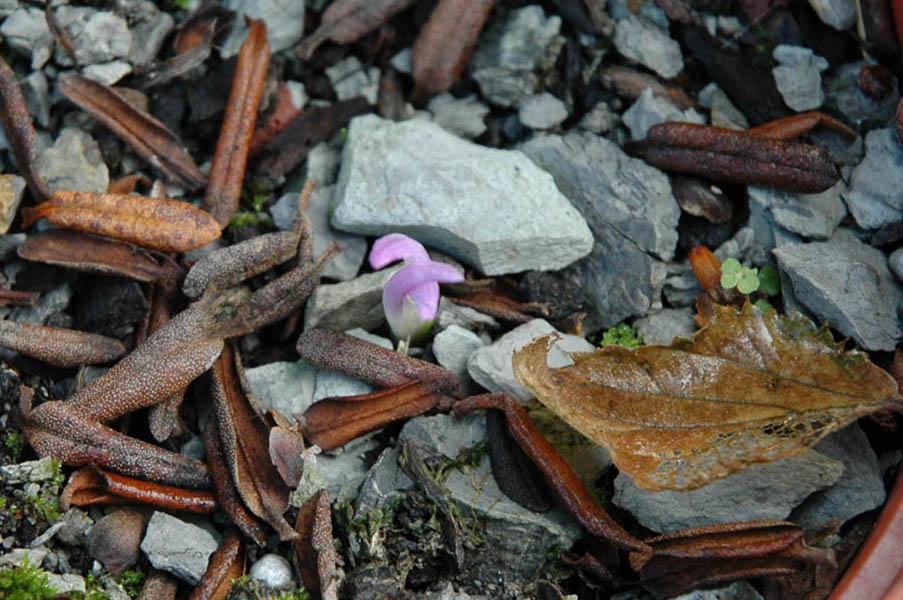
syn. Merendera pyrenaica
syn. Merendera pyrenaica
Bulbous perennial of the Colchicaceae family, the Pyrenean merendera is endemic to the Iberian Peninsula and the Pyrenees, where it grows in rocky grasslands, limestone screes, and stony slopes at altitude, generally between 1,200 and 2,500 meters. It favors well-drained substrates, often limestone, in full exposure.
It is a very low plant, barely 3 to 5 cm in height at the time of flowering, which emerges directly from the stony ground without visible foliage. The leaves, narrow and linear, only appear after flowering, in spring.
The flowers, solitary or in pairs, are composed of six narrow and elongated tepals, pink-lilac to pink-purple, with a whitish throat, with well-visible yellow stamens in the center. Their very open star-shaped form and their long lanceolate tepals immediately distinguish them from colchicums to which they superficially resemble.
In its natural habitat, its flowering extends from September to October. In cultivation, it blooms in the same autumnal periods.
In cultivation, it requires perfect drainage, sunny exposure, and poor stony soil. It is perfectly suited to troughs, alpine containers, and well-exposed rock gardens. Hardy and undemanding once well established, it primarily fears stagnant winter moisture.