Perennial of the Mazaceae family, originating from the Himalayan foothills, northern India, Nepal, and Pakistan, where it colonizes the banks of torrents, humid meadows, and fresh grassy slopes, at altitudes between approximately 1,500 and 3,500 meters.
It forms a very low creeping carpet, barely exceeding 5 cm in height, consisting of stoloniferous stems that root at the nodes and gradually spread over the substrate. The leaves, small, oval, and crenate, with a slightly glossy bright green, form a dense and regular ground cover.
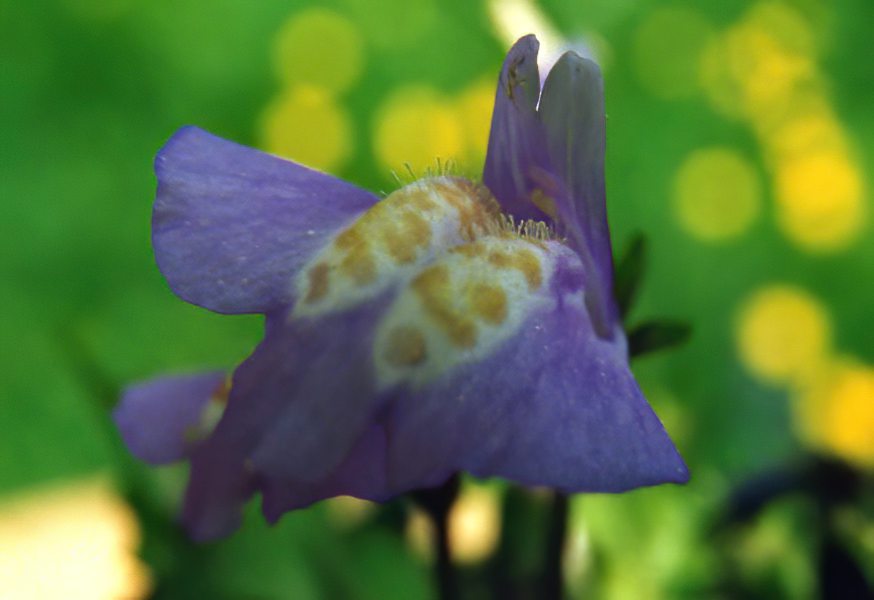
The flowers are bilabiate, with a bright blue-violet to lilac, with the lower lip expanded into three lobes adorned with a creamy white palate spotted with distinct orange to reddish-brown spots, which act as nectar guides for pollinating insects. This spotted pattern at the heart of the flower is one of the most charming details of the species. In its natural habitat, its flowering extends from May to July. In cultivation, it generally occurs from April to June.
It prefers a fresh to slightly moist soil, well-drained in depth, in a sunny to semi-shaded position. It tolerates light trampling and can be interspersed between slabs or pathway stones. Hardy to about -20°C, it is suitable for fresh rock gardens, paving joints, and borders of water features.