Perennial of the Linaceae family, Linum flavum is native to Central and Eastern Europe, from the steppes and dry grasslands stretching from the Balkans to southern Russia. It grows on sunny limestone slopes, the edges of garrigues, and well-drained rocky meadows, generally in plains or low mountains.
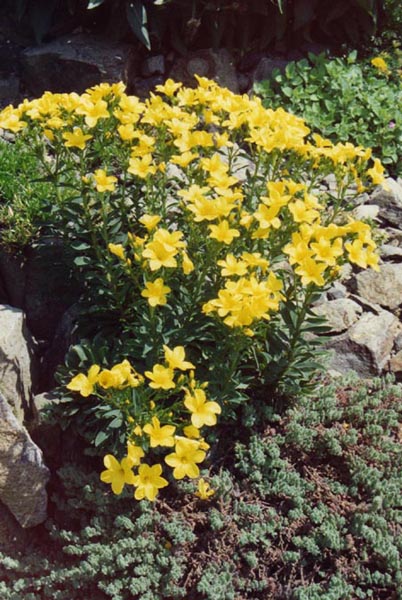
The photos show a plant noticeably more voluminous than its rock garden counterparts: it forms a dense, rounded bush, well-branched, reaching 30 to 40 cm in height and often as wide. The stems are upright, leafy, bearing lanceolate foliage, a deep and shiny green, quite dense, giving the clump a full and bushy appearance even when not in bloom.
The flowers, a bright and clear yellow, with five wide and well-spread petals, are produced in very large abundance in terminal cymes, almost entirely covering the foliage at the peak of flowering. In its natural habitat, its flowering extends from June to July. In cultivation, it can start as early as late May and continue for a good part of the summer.
It requires well-drained soil, preferably limestone, in full sun, and tolerates drought well once established. Its floral generosity and structuring habit make it a reliable choice for large rock gardens and sunny borders.