Caprifoliaceae - North America
Caprifoliaceae - North America
Perennial of the Linnaeaceae family, this North American subspecies of the twinflower is found from western Canada to the mountains of the western United States, where it colonizes shaded coniferous forests, acidic heaths, and cool scree, often under the cover of pines or spruces, between 500 and over 2,000 meters in altitude.
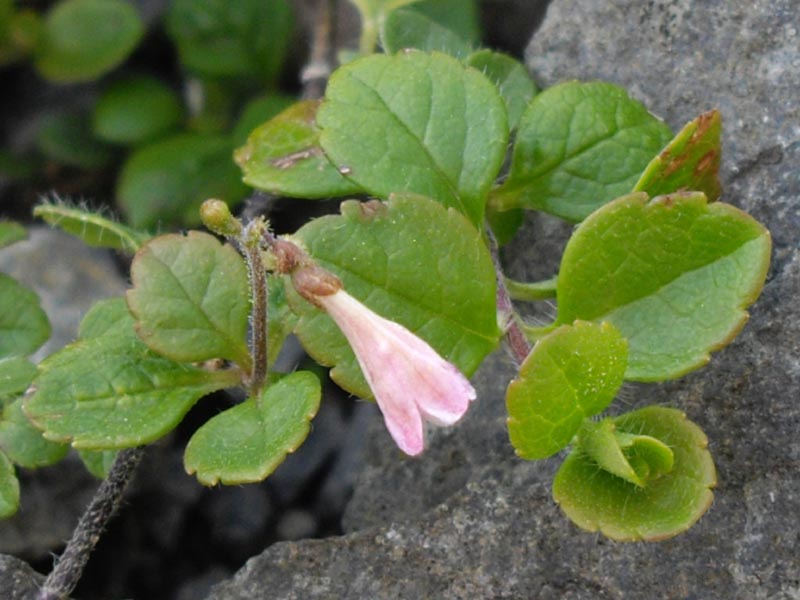
Like the type subspecies, it forms fine creeping mats with slender, hairy stems, anchoring to the ground in places. Its leaves are oval-rounded, distinctly crenate, bright green to dark green, slightly shiny, and larger than those of the European subspecies, which is one of its most distinct characteristics. The flowers, borne on fine bifurcated peduncles densely hairy-glandular, are solitary or twin, tubular-bell-shaped, pale pink, slightly more elongated than in the type form, with an almost tubular appearance at anthesis.
In its natural habitat, its flowering extends from June to August depending on altitude and latitude.
It shares with the nominal subspecies strict cultural requirements: acidic, humus-rich soil, constantly cool, in shade or partial shade, in a climate without excessive heat or drought. A delicate plant, more suited to collection gardens in oceanic or mountainous climates.