Caprifoliaceae - Europe
Caprifoliaceae - Europe
A perennial of the Linnaeaceae family, the northern twinflower is a circumpolar species of the cold and temperate regions of the northern hemisphere, found in Scandinavia, Siberia, North America and, more fragmented, in the Alps and the Pyrenees. It inhabits shaded coniferous forests, heathlands with ericaceous plants, cool screes, and snow hollows, generally between 1,000 and 2,500 meters in altitude in the mountains.
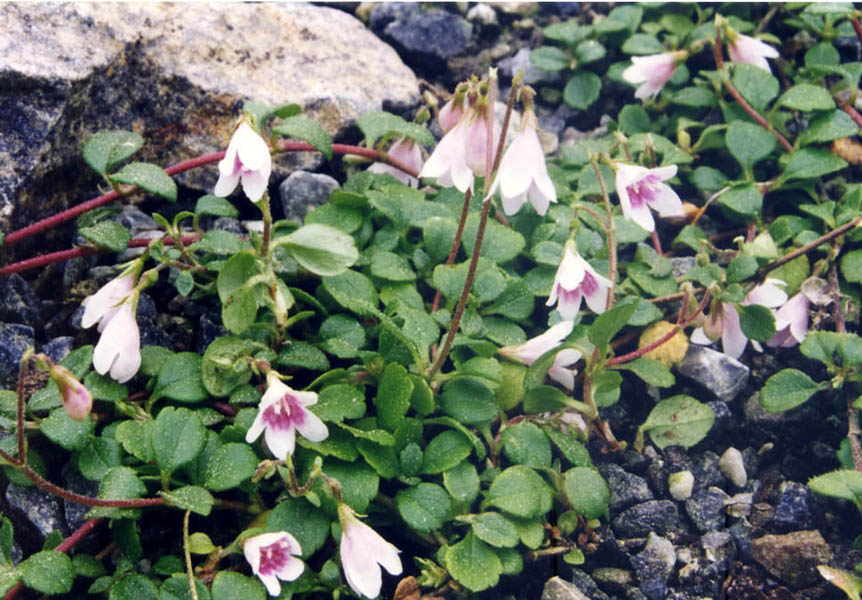
It forms discreet creeping mats a few centimeters high, with reddish threadlike stems spreading across the ground. The foliage consists of small oval leaves, slightly crenate, dark green and shiny, evergreen. The flowers, borne on slender erect and bifurcated peduncles, are bell-shaped, drooping and twinned, pinkish-white to pale pink with purplish-pink streaks inside the corolla. They emit a light fragrance.
In its natural habitat, its flowering extends from June to August depending on the altitude.
Carl von Linné held this plant in particular affection to the point that it was named in his honor; he wished it to appear on his portrait. In cultivation, it requires acidic, humus-rich, cool and well-drained soil, in shade or partial shade, and does not tolerate heat and drought well. A demanding plant, reserved for rock gardens in cool climates.