Lamiaceae. Perennial shrub endemic to southern Spain, mainly the Andalusian sierras, where it grows on rocky limestone slopes, screes, and sun-exposed cliffs, between 800 and 2,000 meters altitude. It is a Mediterranean mountain plant, adapted to dry, scorching summers and cold winters.
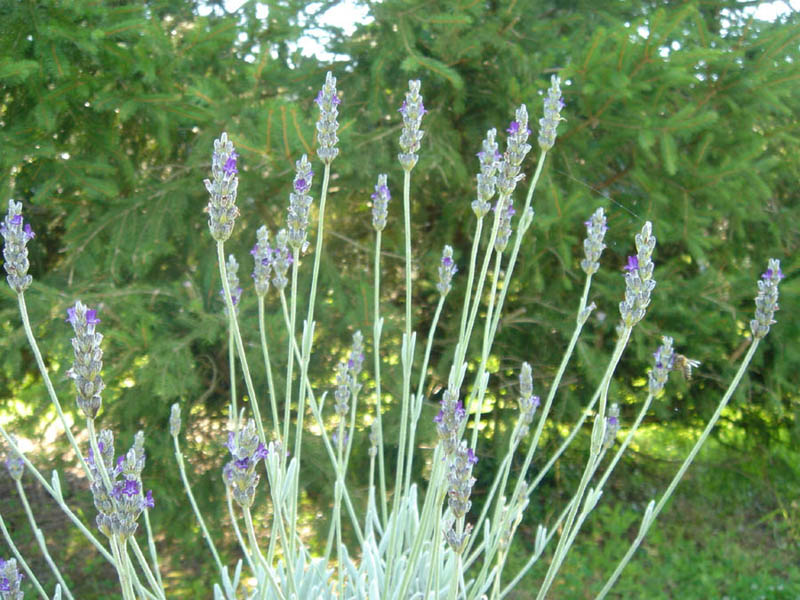
It forms a rounded and compact bush 50 to 80 cm in height, whose most striking feature is undoubtedly its foliage: the broad, spatula-shaped, entire leaves are covered with a thick, woolly tomentum, of an almost luminous silvery white, which gives it its epithet — lanata meaning "woolly". This cottony whiteness also envelops the stems and floral spikes, giving the entire plant a very particular frosted appearance within the genus.
The floral spikes, borne on long, slender, upright stems, are narrow and well detached from the foliage. The flowers are a vivid and intense purple-violet, which stands out brilliantly against the silver of the calyx and woolly bracts. In its natural habitat, its flowering extends from July to August. In cultivation, it generally blooms from June to August.
It requires a limestone, very well-drained, poor soil, in full sun, and tolerates dry cold better than winter humidity. Its hardiness reaches about -12°C in well-drained soil. It is admirably suited to limestone rock gardens and dry gardens with an Iberian inspiration.