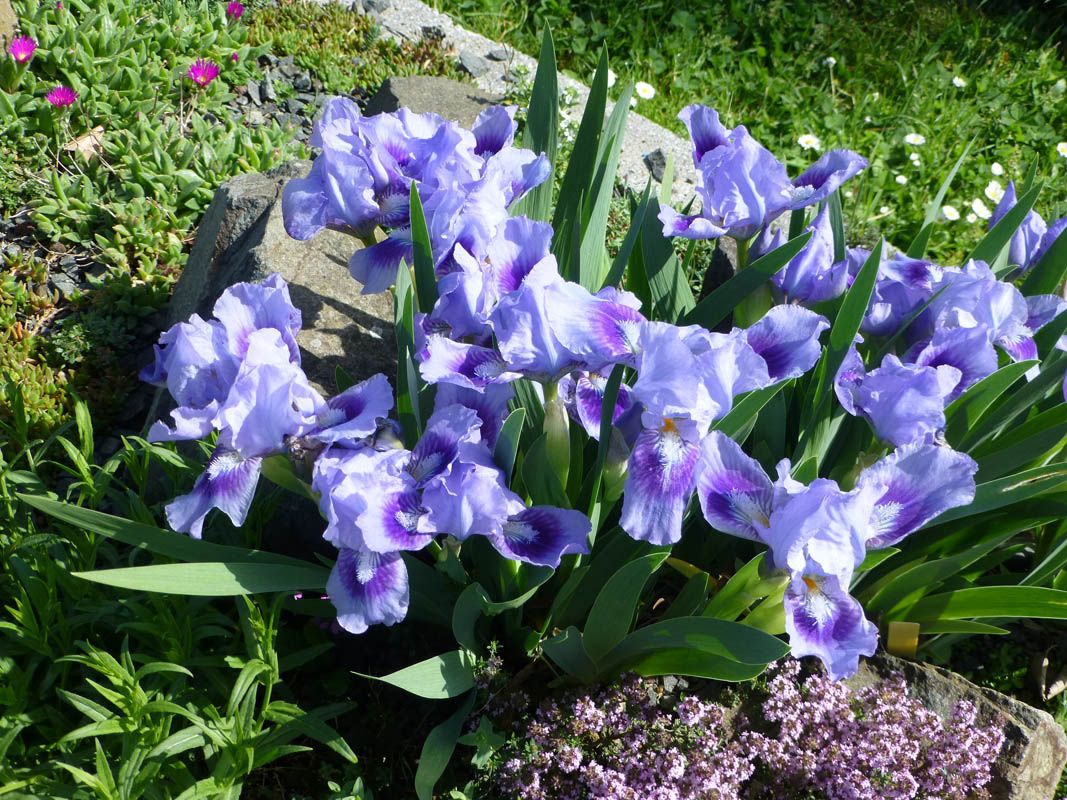
Iris pumila L., a rhizomatous perennial of the Iridaceae family, is native to Central and Eastern Europe, from the Pannonian steppe grasslands to the rocky areas of the Balkans and the Caucasus. It thrives in open, dry, and sunny environments, on well-drained soils, often calcareous or sandy.
It forms compact clumps of short fan-shaped leaves. The flower, borne on a short stem, seems to emerge directly from the ground — this characteristic habit makes it one of the most easily recognizable dwarf irises.
This cultivar features light and bright lavender blue flowers, with a large, well-defined central purple-violet patch on the falls, creating a clear and elegant bicolor contrast. The central beard, short, is orange-yellow, a warm color point at the heart of the flower.
In its natural habitat, the flowering of Iris pumila extends from April to May. In cultivation, this cultivar is one of the first irises to open, often as early as March in sheltered situations.
Cultivation in full sun, well-drained and low-fertility soil; it dislikes excess moisture, especially in winter. Excellent in rock gardens or walls, where its early flowers bring a much-anticipated touch of color at the end of winter.