Dwarf shrub of the Hypericaceae family, endemic to the Kaz Dağı massif (Mount Ida) in northwestern Turkey. It colonizes rocky screes, stony slopes, and high-altitude rockeries in full exposure, on poor, well-drained mineral substrates.
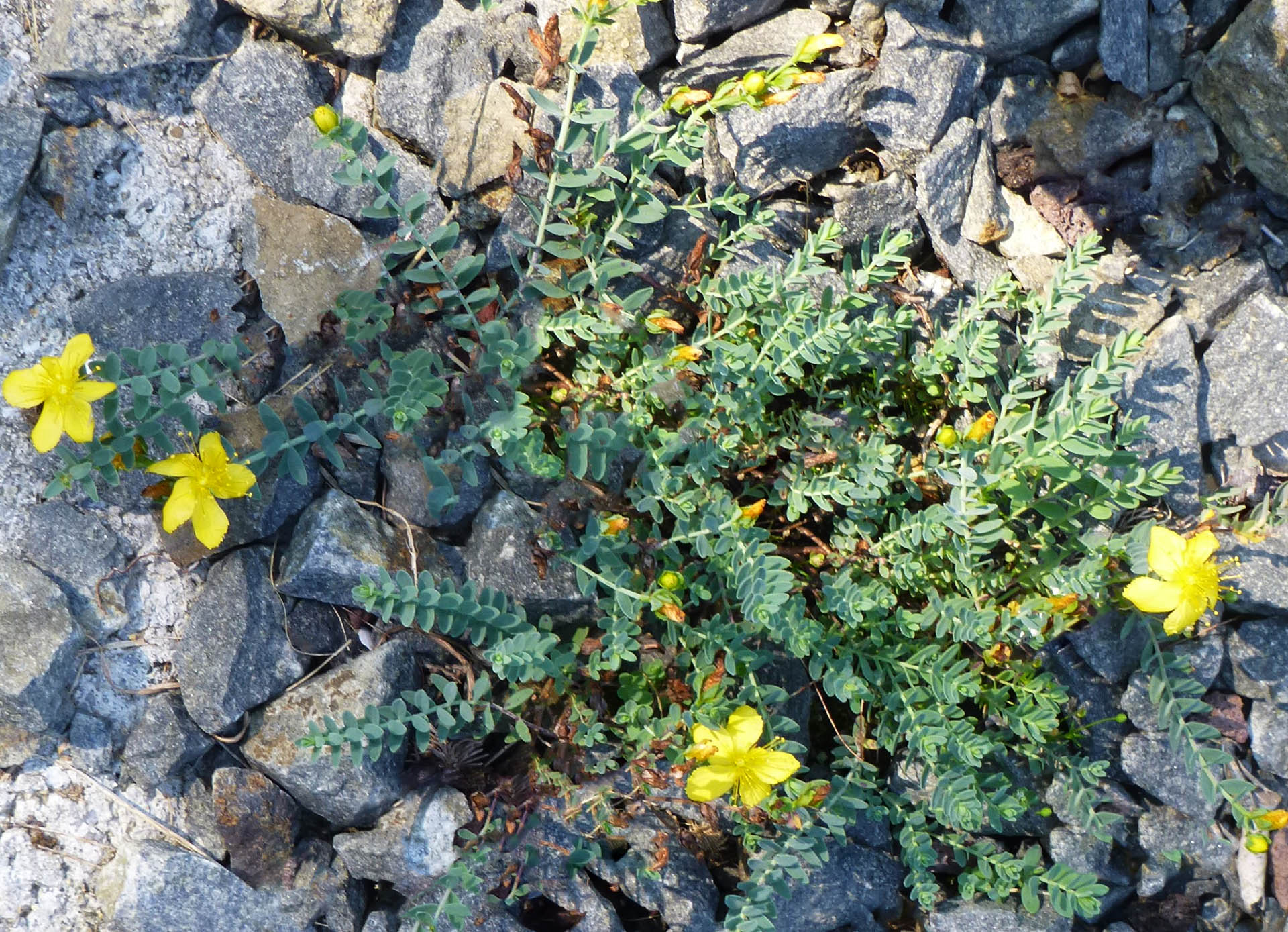
The plant forms creeping and spreading tufts, woody at the base, 10 to 20 cm in height, weaving between stones with remarkable ease. The leaves are small, oval to suborbicular, glaucous, densely arranged along slender stems that branch abundantly. The sepals and flower buds take on a characteristic reddish to orange hue, very visible before opening and at the time of withering, creating a persistent contrast with the bright yellow of the open flowers.
The flowers are large relative to the size of the plant, bright lemon yellow, with five well-developed petals and numerous stamens. In its natural habitat, flowering extends from June to August.
In cultivation, it requires a very well-drained, mineral soil in full sun, and tolerates summer drought well. Its creeping habit and large flowers disproportionate to the size of the plant make it a particularly interesting subject for rockeries and walls. Hardiness remains to be confirmed by experience in wet winter conditions.