Perennial of the Hypericaceae family, present in Atlantic Western Europe: Great Britain, Ireland, Western France, Iberian Peninsula and the western Mediterranean rim. It is a plant strictly confined to humid to waterlogged environments: edges of bogs, banks of streams with acidic water, marshy heaths and seepages on siliceous substrates. It grows in plains as well as in moderate altitude.
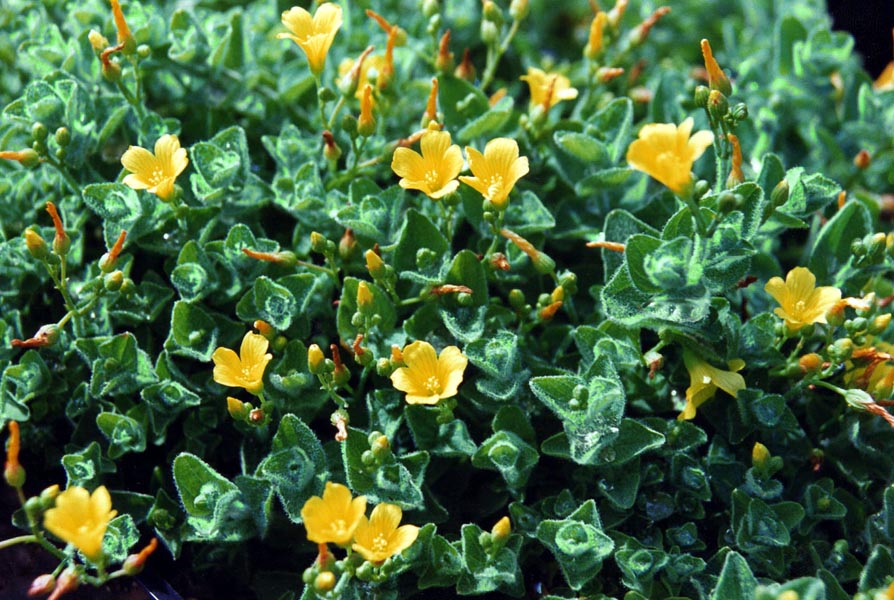
It forms creeping and dense mats, 10 to 30 cm in height, with stoloniferous stems. The foliage is particularly remarkable: the leaves are oval, sessile, amplexicaul, of a medium green, covered with a fine glandular pubescence that gives them a slightly velvety and slightly grayish appearance on the edges. The flower buds are reddish to orange, clearly visible above the carpet of leaves.
The flowers are pale yellow to sulfur yellow, small, with five petals, borne in loose cymes. In its natural habitat, flowering extends from June to August.
In cultivation, this species requires constantly moist to waterlogged, acidic, poor soil, in full sun or light partial shade. It is completely unsuitable for dry rock gardens and is suitable for bog gardens or the banks of water bodies on acidic substrate. Its hardiness is good in regions with mild and humid winters.