Perennial of the Plantaginaceae family, this globularia is widespread in Central and Southern Europe, from the Iberian Peninsula to the Balkans and as far as Asia Minor, where it occupies dry calcareous grasslands, edges of light woods, sunny embankments, and rocky areas, from the plains up to about 1,500 meters.
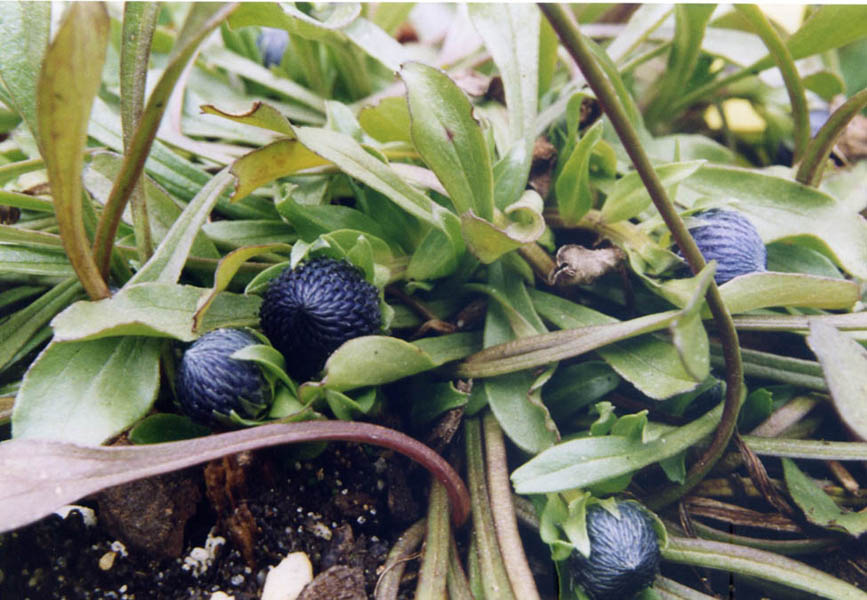
It is distinguished from other species of the genus by its more slender size: the leafy flowering stems can reach 20 to 40 cm, bearing lanceolate, sessile, well-developed cauline leaves that visibly dress the stem along its entire length. The basal rosette is composed of spatulate to oval leaves, often slightly notched at the top. A characteristic detail: the still-closed flower buds present a blue-gray to almost intense indigo hue, very different from the final color of the open capitula.
The latter are medium lavender blue to blue-lilac, spherical, with prominent stamens. In its natural habitat, its flowering extends from May to July. In cultivation, it generally blooms in May-June.
It requires a well-drained calcareous soil, poor to moderately fertile, in full sun. Its taller silhouette than most of its congeners makes it a useful subject for bringing verticality to a rock garden, in association with lower ground-covering species.