Perennial of the Plantaginaceae family, this globularia is widespread in the mountains of southern Europe, from the Pyrenees to the Alps and the northern Apennines, where it frequents limestone grasslands, rocky areas, and edges of hook pine forests, generally between 800 and 2,200 meters in altitude.
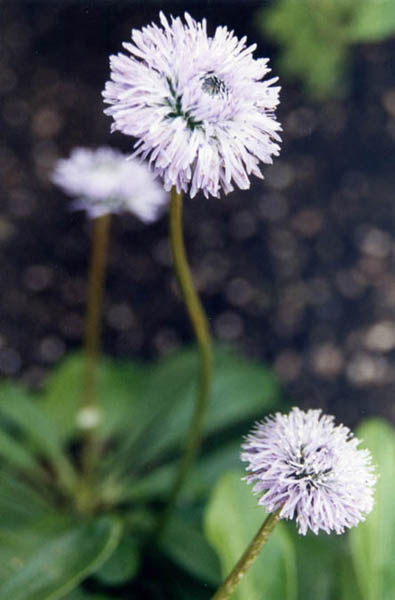
It is clearly distinguished from other species of the genus by its flower stems completely devoid of leaves — a characteristic to which it owes its epithet nudicaulis — rising 15 to 35 cm above a well-developed basal rosette. These basal leaves are large, oval to elliptical, entire, leathery, dark green and shiny, with well-marked veins, persistent in winter.
The solitary capitula, borne at the top of these bare stems, are spherical, pale lavender-blue to soft lilac, composed of numerous small bilabiate flowers with protruding stamens that give them their usual fluffy appearance. In its natural habitat, its flowering extends from May to July depending on the altitude. In cultivation, it generally occurs in May-June.
It thrives in well-drained limestone soil, in sunny to light partial shade exposure, and tolerates a slight coolness of the substrate better than a number of its congeners. It is suitable for large rock gardens and naturalistic compositions with a mountain spirit.