A perennial of the Ericaceae family, Gaultheria procumbens is native to eastern North America, from the Appalachians to the Great Lakes. It grows in the acidic undergrowth of conifers and deciduous trees, on sandy, poor, and well-drained soils, often accompanied by mosses and wild blueberries.
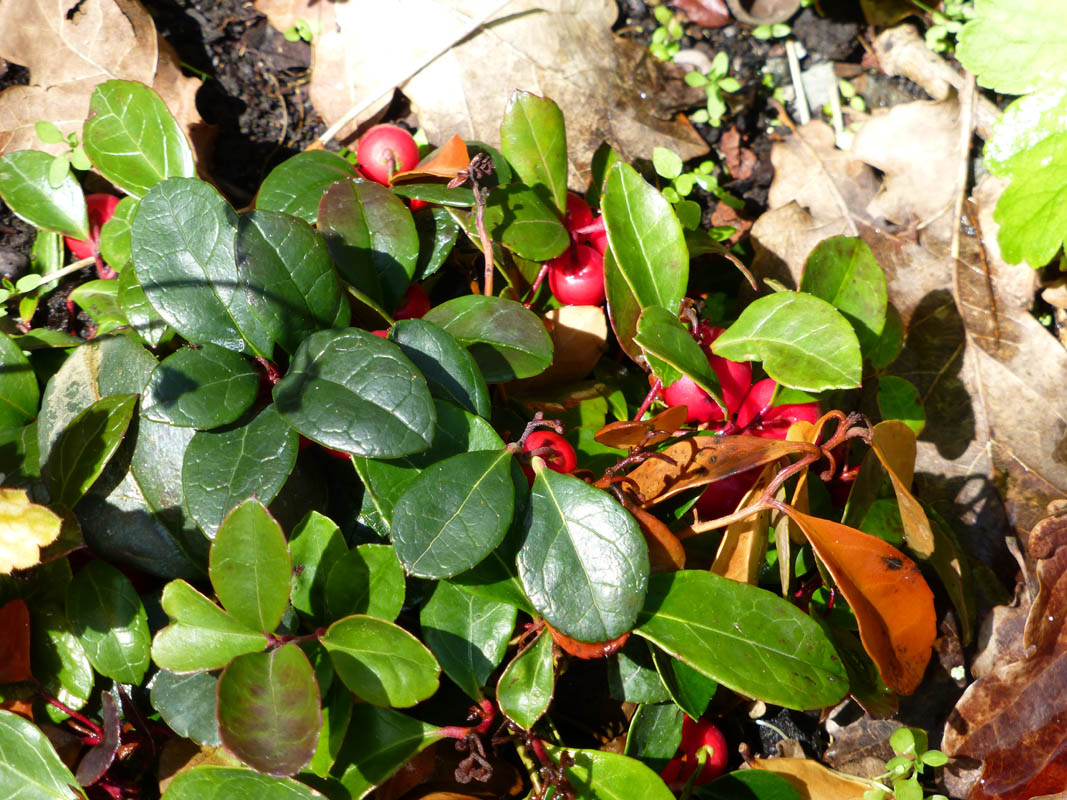
It forms a creeping and dense carpet 10 to 15 cm high, with woody stems bearing small, oval, leathery leaves, dark green and shiny, slightly toothed. When crushed, they emit a characteristic wintergreen scent — the gaultheria — due to the presence of methyl salicylate, a compound long extracted industrially from the plant to flavor candies and therapeutic balms.
The flowers, small, pinkish-white, in hanging bells, appear in summer. They are followed by bright red berries persisting for much of the winter, which constitute the main attraction of the plant in the cold season. In its natural habitat, its flowering extends from June to August.
It imperatively requires an acidic, cool, humus-rich, and well-drained soil, in shade or partial shade. It tolerates neither limestone nor drought. An excellent ground cover for heather gardens and compositions in peaty soil, it spreads slowly by underground stolons.