Perennial sub-shrub of the Cistaceae family, Fumana procumbens is widespread in the Mediterranean basin and extends northwards to the warm calcareous grasslands of Central Europe, from France to the Balkans. It colonizes dry rocky grasslands, open garrigues, sunny limestone screes, and rock crevices, from warm lowland slopes up to about 1,500 meters in the mountains.
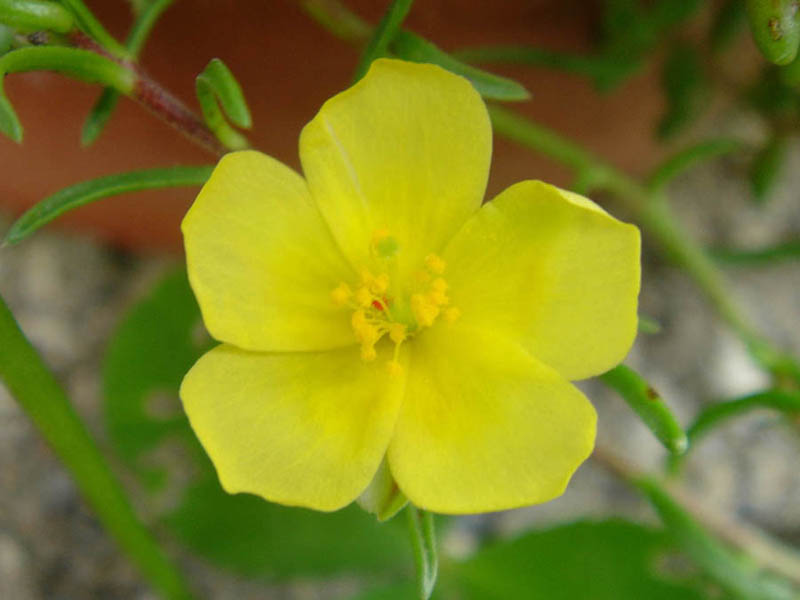
It forms low and spreading, even creeping tufts, rarely above 15 to 20 cm, with woody stems at the base, thin and branched, covered with evergreen foliage. The leaves are small, linear, alternate, slightly glandular, and sticky to the touch, sometimes emitting a slight resinous scent. The bright yellow flowers with five petals are reminiscent in miniature of those of rockroses; they open briefly in the morning and fall quickly, giving way to small capsules.
In its natural habitat, its flowering extends from May to July. In cultivation, it blooms from May to June.
Perfectly suited to very well-drained limestone rockeries and sunny walls, it requires poor, dry soil in full sun and does not tolerate stagnant winter moisture. Its spreading habit and drought resistance make it an ideal choice for Mediterranean rockeries.