syn. Dianthus webbianus
syn. Dianthus webbianus
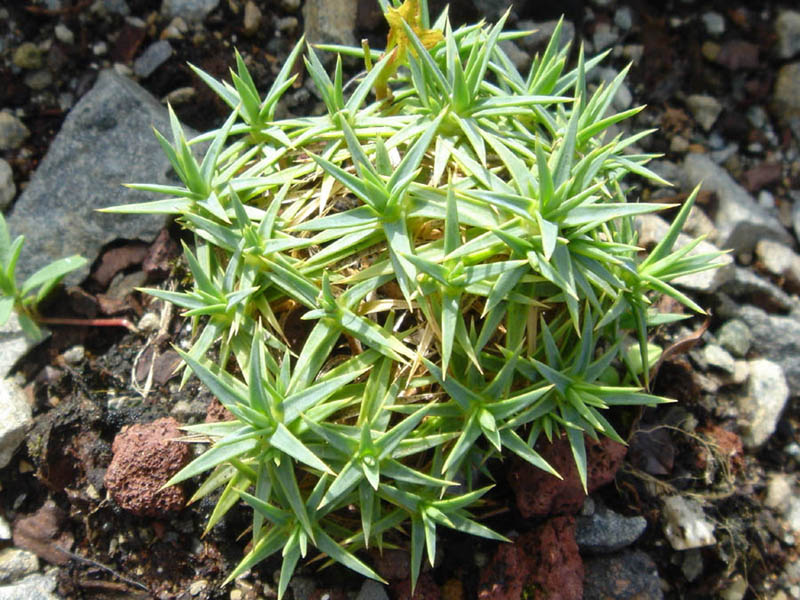
A perennial from the Caryophyllaceae family, Dianthus erinaceus is native to Turkey, where it occupies the rockeries, screes, and limestone cliffs of the Anatolian mountain ranges, generally between 1,000 and 2,500 meters in altitude. Its epithet, from the Latin erinaceus, hedgehog, says it all about its appearance: the plant forms a hard, dense, and prickly cushion, with star-shaped rosettes composed of short, rigid, sharp-tipped leaves, from bright green to gray-green, which give it an almost cactus-like silhouette outside of flowering, quite unusual in the genus.
The contrast is all the more striking during flowering, when short upright stems emerge from the spiny cushion to bear solitary pale pink to delicate lilac flowers, with slightly toothed petals, of great simplicity. In its natural habitat, its flowering extends from June to July. In cultivation, it generally occurs in June, sometimes with a few flowers in May depending on the exposure.
It is a species for demanding collectors: it requires perfect drainage, a lean and stony soil, preferably limestone, in full sun exposure. It tolerates summer drought well and above all dreads stagnant moisture in winter. The dry rockery, trough, or rock crevice suits it perfectly. Its longevity and the architectural coherence of its cushion make it a remarkable plant all year round.