 ..
..
 ..
..
Perennial of the Asteraceae family, this plant is native to the Moroccan High Atlas massif, where it grows on rocky slopes, limestone cliffs, and sunny rocky slopes, at altitudes between approximately 1,500 and 2,500 meters. It is sometimes referred to as Rhodanthemum hosmariense in horticultural literature, a name under which it remains widely known in gardens.
It forms low, spreading clumps, 20 to 30 centimeters in height, with a semi-woody base, producing flexible, branched stems that spread over the substrate. The foliage is finely cut, pinnatifid to bipinnatifid, of a very pure silvery white and a silky texture, which remains decorative all year round and constitutes one of the most refined foliage among rock garden asteraceae.
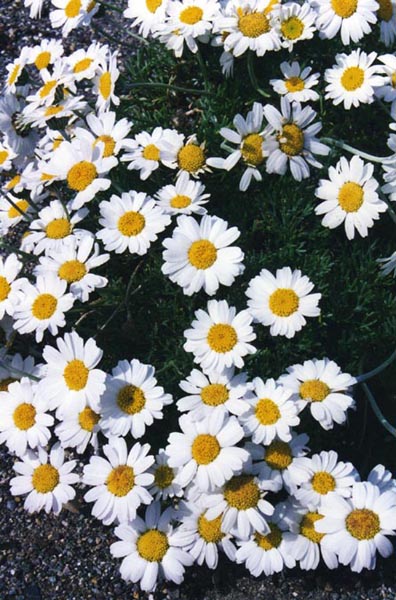
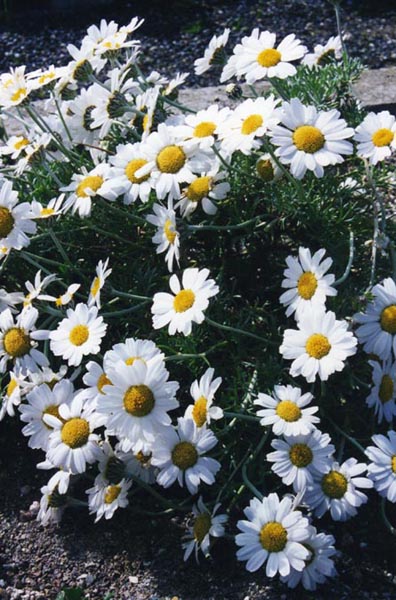
The flower heads are relatively large, with immaculate white ligules, broad and well-arranged around a bright golden yellow central disc. The contrast between the whiteness of the ligules, the silvery foliage, and the intensity of the yellow disc is particularly striking.
In its natural habitat, its flowering extends from May to July. In cultivation, it can start as early as April and continue intermittently until autumn in mild climates.
It requires very well-drained soil, poor to moderately fertile, in full sun exposure. Sensitive to excess winter moisture, it is advantageously cultivated on a wall, in a raised rock garden, or between the blocks of dry masonry.