syn. Artemisia mutellina
syn. Artemisia mutellina
Perennial of the Asteraceae family, Artemisia umbelliformis is a species from the mountainous regions of Central and Southern Europe, present in the Alps, the Northern Apennines, and the Carpathians. It occupies rock gardens, stabilized screes, ridges, and open high-altitude grasslands, on well-drained siliceous or calcareous substrates, generally between 2,000 and 3,500 meters.
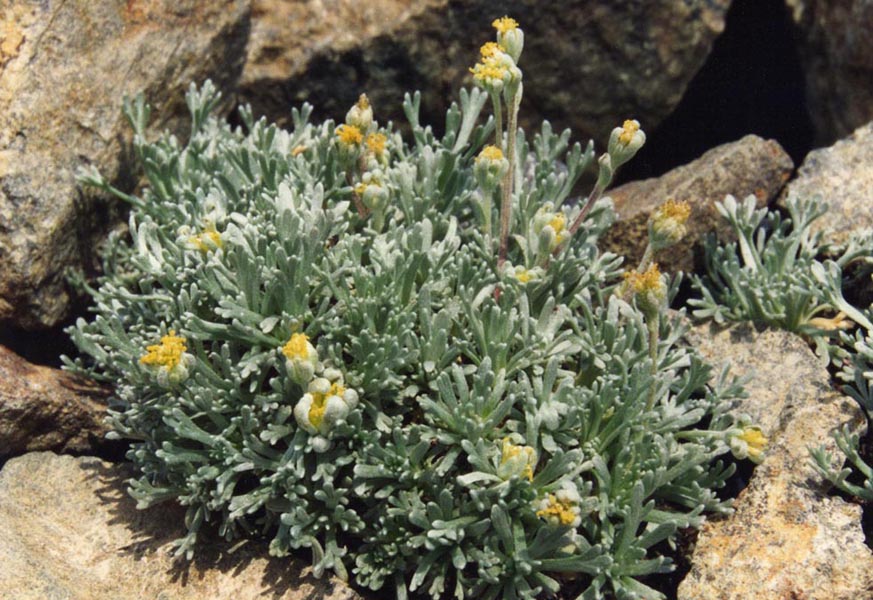
It forms small, dense, low tufts, 10 to 25 cm in height, with a loose cushion habit. The foliage is finely divided into very narrow linear segments, covered with a silky tomentum that gives it a delicate and luminous silvery appearance. When crushed, the leaves release an intense and pleasant fragrance, both aromatic and slightly spicy, which has earned the plant a long-standing reputation in the making of alpine liqueurs, notably Genepi, of which it is one of the traditional components along with other related species.
The capitula, small and yellowish, are grouped in short, upright clusters. In its natural habitat, its flowering extends from July to September.
In cultivation, it requires a very well-drained, poor, mineral soil, in full exposure and in a cool atmosphere. It is suitable for high-altitude rock gardens and alpine troughs, but has difficulty tolerating heat and stagnant winter humidity in lowlands.